
Essential Photography Gear for Shooting in Winter
Winter is truly delightful and full of abundant photographic opportunities. It is a wonderland and can be one of the most beautiful and rewarding seasons for photography. Although the season may be harsh, is proves to be superbly magical. And all because of tiny molecules of water in varying forms. But photographing in these conditions can be challenging. Extreme temperatures and wind can interfere with the most creative adventures.
I’ve put together a list of photography gear that I use regularly that help me stay out photographing. Some of the items I discuss are very important while others are recommended. You don’t have to go out and purchase all this gear if you don’t already have it, but these items will allow you to stay out longer and allow you to obtain a more prolific photo shoot. One thing to note about me is that I attempt to keep my gear and my pack as lightweight and minimal as possible no matter what time of year I am photographing. This mindset helps shape the gear I select and use.
None of the links below are affiliate links where I receive money for clicks or purchases. They are merely to help you see what products I use or examples.
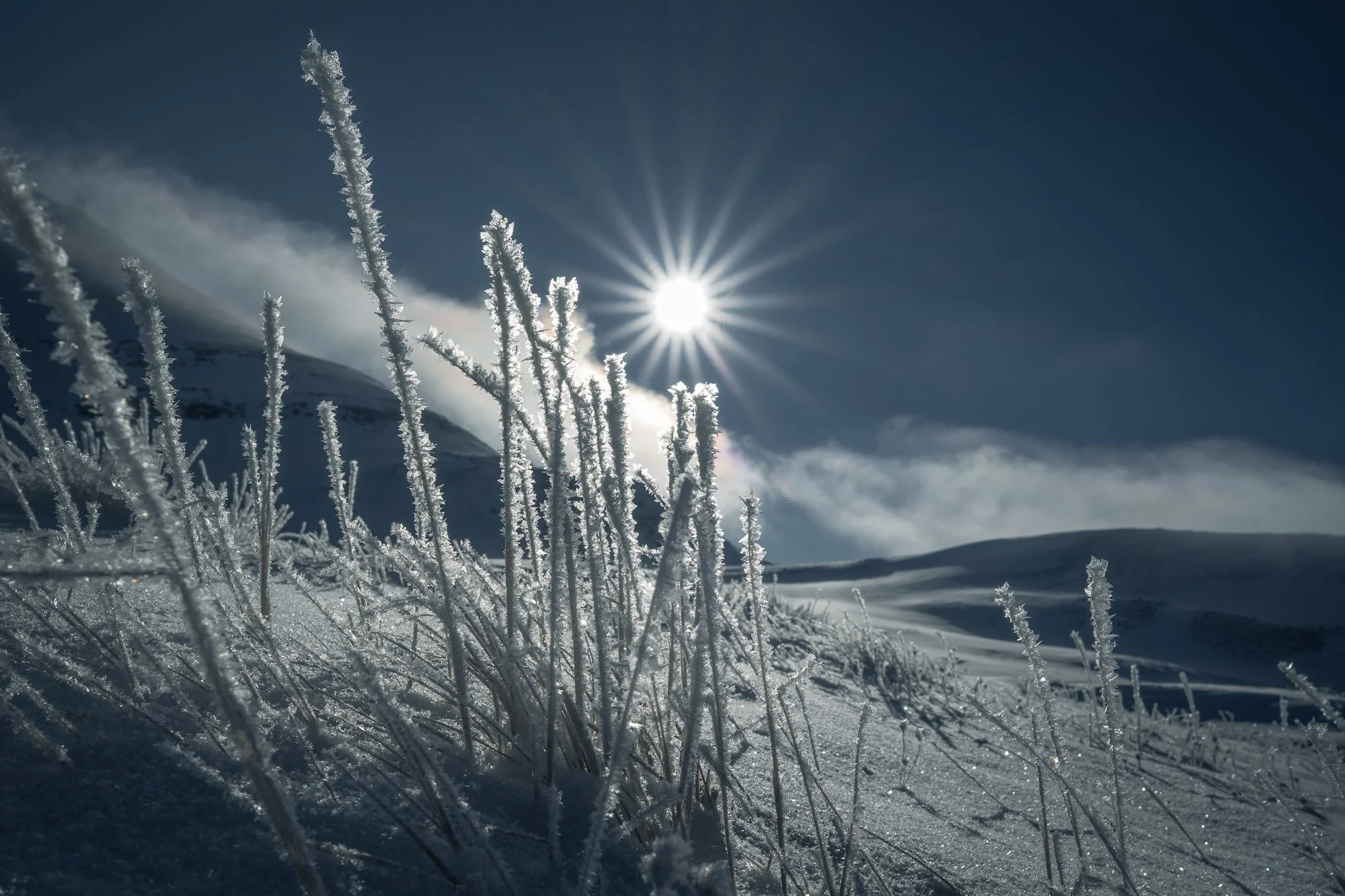
Cameras: With few exceptions, cameras are designed to function without problems down to 32°F (0°C), and many claim full functionality down to about 14°F (-10°C), albeit with increasing signs of sluggishness as the temperature drops.
Camera bag/backpack: expect to have to lay your bag down on ice or snow or keep it on your back while shooting. A good water resistant or waterproof backpack protects your equipment and provides a great place to work from without worrying about my gear. You may consider bringing a plastic bag to put your bag on if yours isn’t water resistant. I use the Shimoda Action x50 v2 backpack and have been extremely happy with it. It protects all my gear and can easily be put down on snow or ice to use as my mobile workspace without worry.
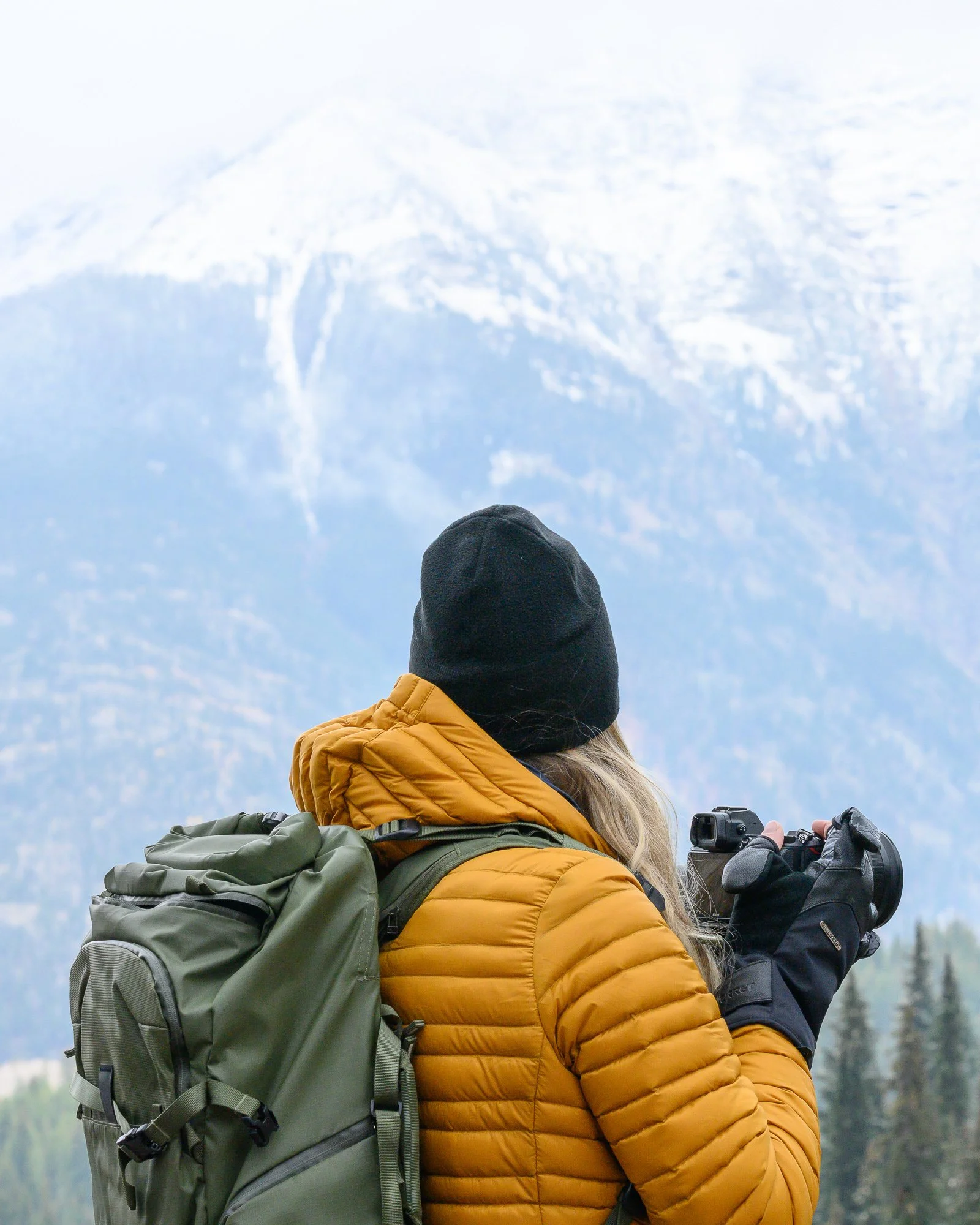
Gloves: These may be one of The Most Important Pieces of gear. If you were to spend any amount of money preparing for a winter shoot, this would be on the top of the list. Having he right pair of gloves is a gamechanger. Convertible gloves allow you the dexterity of your fingertips whilst keeping the rest of your hands warm. Otherwise, you’ll be pulling those toasty warm gloves on and off to operate your camera.
Lightweight gloves: For those lighter conditions where temps aren’t as extreme, my go-to gloves are convertible mittens by Trailheads.
Heavy weight gloves: For those extreme conditions, my Tinden gloves by Vallerret are the saviors.
Sturdy tripod (with leg warmer): Having a sturdy tripod is essential for many landscape and nature photographers. This is equally so when photographing in winter. I recommend finding a tripod that allows you to remove the center column. This isn’t mandatory, but affords you the ability to get close to the ground/ice for those great wide-angle images with intricate ice formations in the foreground or creating small-scene photographs. Another thing to consider is a tripod leg-warmer. I didn’t initially think of this on purpose until I ditched my old sturdy, purple, Mefoto tripod of 10 years and purchased a new one. I realized quickly that my new, Ascend-14-BH compact carbon fiber travel tripod with built-in ball head, didn’t have a foam grip that came in handy during extreme temperatures. When carrying my old tripod in cold temps, I got used to carrying it by the grip (without really even thinking about it)…it kept my hands from freezing when holding onto the cold metal legs. I searched and found something that could be added, but they usually come in 3-packs to put on each leg. There’s no need to carry extra weight though, just one will do. I gave the other two to other photographers. They are made of neoprene and can Velcro on and off. That way, you can take it off when photographing on warmer days. A sample of what I use can be found here by Sunwayfoto.
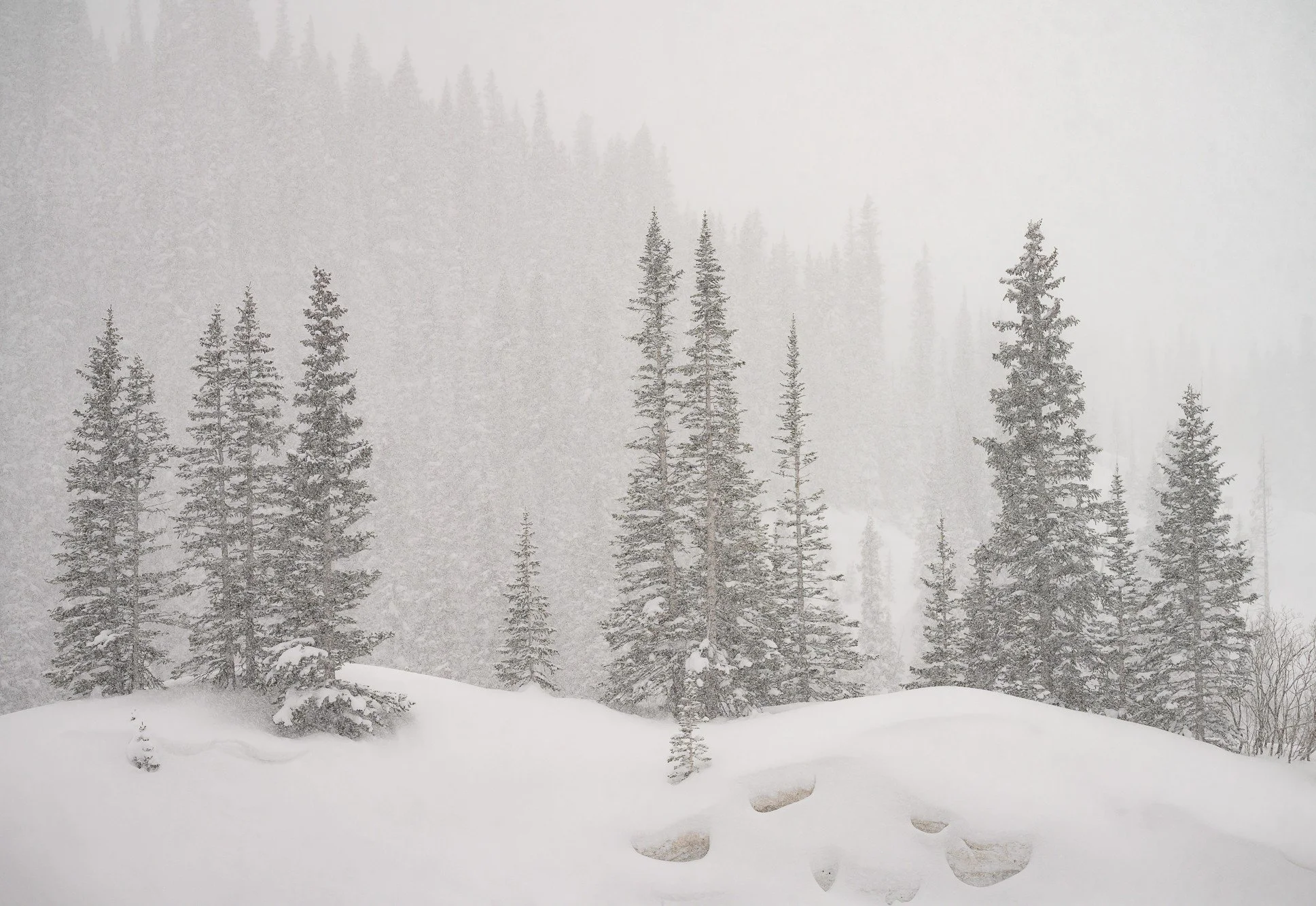
Camera protection: I use a Nikon camera that is weather sealed and more resistant to weather than many other brands, but I still carry and use camera protection depending on how much moisture I’m photographing in. There are two different versions I pack or carry depending on the conditions. The first is an ultra-lightweight Movo rain cover. These are so lightweight, I carry one in my pack at all times in case of high winds in sandy conditions or snowy/rainy conditions. For bigger jobs, I’ll pack my Alturo camera rain cover.
Extra batteries: As camera batteries (like many batteries) are sensitive to cold weather, it is important to bring some backups and keep them in an inside pocket.
Lens hood: One of the simplest yet effective camera accessories you can use in winter conditions is your lens hood. Not only do they help prevent that unwanted glare in your camera view, but they provide extra weather protection for your front lens element. In snowy conditions, snowflakes can easily get onto your lens. If nothing else, the hood can help reduce the amount of snow and moisture from landing on the lens, so you won’t have to use your lens cloth as much. While I recommend this one, I don’t usually carry these myself because they are extra weight and accessories to deal with, but I do find myself wishing I had them with me sometimes.
Lens cloth and blower: These are items I always carry in my bag, but worth mentioning again as I use them a lot more often in extreme weather conditions. In winter, I usually have a few extra lens cloths floating around.
Filters: polarizers and neutral density filters can be very useful when photographing in winter. They can help reduce glare and protect your lens from harsh conditions.
Important note: when you move from somewhere very cold to somewhere warmer, there is the risk that moisture will condense on or inside your equipment. Moisture does not play well with the internals of most cameras and lenses, and protecting your camera from it is very important. Be sure to put your camera back in its bag and leave it there when you go inside so that it warms slowly. If you want to review the images during that time, be sure to grab the memory card before stowing the camera.
Non-Photography Gear
I’m also including a short list of non-photography related items I nearly always have with me that I find incredibly useful.
Micro spikes: my favorites are by Yaktrax Diamond Grip Traction. Micro spikes are a must for me. Friends of mine use a variety of micro spikes some of which are all metal. I use these in particular because they are far easier to slip on and off, they grip in all directions, and they don’t lose spikes or rings like others do.
Hand/feet warmers: I’m not particular on brand here, but I’ve known some to work better than others. I keep boxes of each at home and always carry a pair or two in my bag during colder months.
Gaiters: There are a variety of these that will do the job. I’ve been using Pasanava leg gaiters for three years now and love them because they are simple to put on and take off, provide a waterproof layer, and are easily adjustable.
Hiking poles: Although I’m a backpacker, I don’t use hiking poles in the summer near as much as I do in winter. I carry a set of lightweight, extendable poles so they easily attach to my camera backpack. They come in very handy on snowy, slippery, and icy trails. The ones I carry are trekking poles by Black Diamond.
Emergency equipment: No matter what adventure I am on, safety equipment is a first. This topic can be a whole article on its own, so I won’t go into detail here. The list includes things such as a Garmin InReach, maps, first aid, and more.